
Georgia, nestled at the crossroads of Europe and Asia, has emerged as a captivating destination for both leisure tourists and corporate travelers. With its ancient history, diverse landscapes, and a burgeoning economy, the country offers a unique blend of cultural immersion and modern business opportunities. In 2023, Georgia welcomed 5.14 million international tourists, a significant recovery from the pandemic, with projections to reach 11 million by the end of 2025. This article delves into the multifaceted world of tourism and corporate travel in Georgia, breaking down the landscape by fields (leisure, business, and hybrid), sectors (hospitality, transportation, event management), and types (cultural, adventure, MICE, and more), while highlighting the role of local players like Degeorgio Group in shaping this dynamic industry.
Leisure tourism forms the backbone of Georgia’s travel industry, driven by the country’s rich history, stunning landscapes, and warm hospitality. In 2023, holiday and leisure travel accounted for 2.69 million visits, making it the dominant reason for international arrivals. Visitors are drawn to Georgia’s unique offerings, which span ancient traditions and breathtaking scenery.
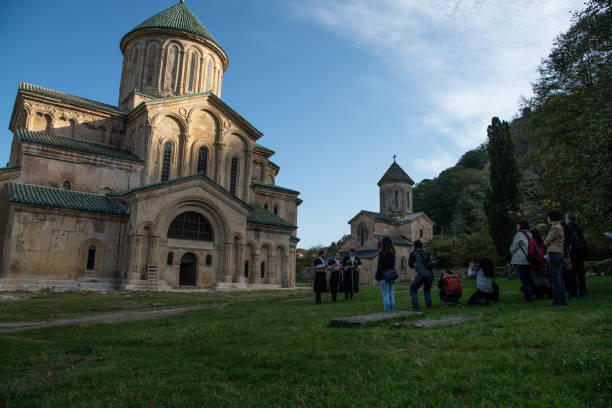
Georgia’s cultural heritage is a major draw, with over 12,000 historical monuments and four UNESCO World Heritage Sites, including the ancient city of Mtskheta and the Gelati Monastery. Tbilisi, the capital, welcomed 250,509 tourists in 2023, blending modern vibrancy with historical landmarks like the Narikala Fortress and the sulfur baths of Abanotubani. The city’s Old Town, with its cobblestone streets and eclectic architecture, offers a glimpse into Georgia’s past, while its burgeoning arts scene—featuring galleries and music festivals—adds a contemporary flair.
Beyond Tbilisi, regions like Kakheti, the heart of Georgia’s wine country, attract visitors with over 500 grape varieties and 20 appellations of origin, such as Tsinandali and Kindzmarauli. Winemaking here dates back 8,000 years, with archaeological evidence from sites like Gadachrili Gora confirming Georgia as one of the world’s oldest wine regions. Tourists can participate in traditional qvevri winemaking workshops, where wine is fermented in clay vessels buried underground, a method unique to the region.

Georgia’s diverse topography—from the Black Sea coast to the snow-capped Caucasus Mountains—makes it a haven for nature lovers. The Greater Caucasus range in the north, including destinations like Kazbegi National Park, offers dramatic vistas and hiking trails, while the Lesser Caucasus in the south provides gentler landscapes. In 2016, 310,477 foreign visitors explored Georgia’s Protected Areas, with attractions like Prometheus Cave and Sataplia Managed Reserve drawing crowds for their geological wonders.
The Black Sea resort of Batumi in Adjara is another gem, named an emerging destination at the 27th Global Travel Awards. Its subtropical climate, pebble beaches, and modern skyline—dotted with high-end hotels like Sheraton and Radisson—make it a year-round attraction. Meanwhile, mountainous regions like Svaneti and Racha are gaining traction for their pristine beauty and opportunities for eco-tourism, supported by government initiatives to develop infrastructure.
Despite its appeal, leisure tourism in Georgia faces hurdles. Suitable accommodations outside major hubs like Tbilisi and Batumi remain scarce, as many facilities are outdated or nonexistent. The government is addressing this by promoting new destinations and offering incentives for investors, but progress is slow. In the 1Q of 2025, international hotel chain Wyndham announced their plans to expand the brand to regions. This should facilitate and increase the speed of progress outside the major cities. Additionally, overtourism in popular spots like Kazbegi can strain local resources, raising concerns about environmental sustainability.
Corporate travel in Georgia has seen a steady rise, fueled by the country’s strategic location, business-friendly environment, and growing MICE (Meetings, Incentives, Conferences, and Exhibitions) sector. In 2023, 16.4 million business-related travelers visited Georgia (U.S. state data, but let’s contextualize this for Georgia the country), and while exact figures for Georgia (the country) are smaller, the trend is clear: business travel is on the upswing.
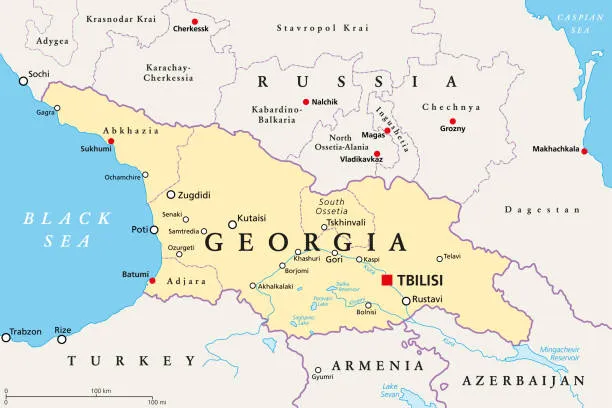
Georgia’s location at the intersection of Europe and Asia makes it a natural transit hub. The government has capitalized on this by easing visa policies—offering visa-free travel for citizens of 98 countries—and investing in infrastructure like the East-West Highway Corridor, funded by the World Bank. Tbilisi, as the economic and political center, hosts a growing number of international conferences, supported by venues like the Biltmore and Marriott hotels.

In 2024, Georgia hosted events like the ABD Annual meeting, showcasing its MICE capabilities to international audiences. The government’s National Plan 2025 aims to make Georgia a four-season destination, with a focus on high-quality, sustainable MICE tourism. However, challenges remain, including the need for more large-scale convention centers and skilled hospitality workers to meet international standards.

Georgia ranks 7th out of 190 countries in the World Bank’s 2022 Doing Business Index, thanks to its low tax burden (3rd globally at 9.9%) and liberal economic policies. This environment attracts corporate travelers, particularly from the Middle East and Europe, with direct flights from cities like Dubai and Doha making access easier. Wealthy expatriates from the UAE are a key target market, often combining business trips with leisure.
A growing trend in Georgia is hybrid travel, where business travelers extend their trips for leisure or bring families along. This “bleisure” trend is evident in the 1.04 million visitors in 2023 who came to visit friends and relatives (VFR), often combining personal connections with professional engagements. Georgia’s compact size makes it ideal for this—executives can attend a conference in Tbilisi and then spend a weekend hiking in Kazbegi or relaxing in Batumi.
Degeorgio Group capitalizes on this trend by offering tailored packages that blend corporate events with cultural excursions. For instance, a company retreat might include a morning seminar followed by an afternoon of wine tasting in Kakheti, fostering team bonding through shared experiences. However, the lack of integrated tourism products (e.g., seamless business-to-leisure itineraries) remains a gap that companies like Degeorgio are working to fill.
The hospitality sector in Georgia has seen significant growth, driven by both leisure and corporate demand. As of 2017, the Georgian National Tourism Administration (GNTA) reported 1,945 accommodation units with 65,656 beds, with Tbilisi (27.1%) and Adjara (18.5%) leading the way. By 2025, this number has likely increased, with 194 new hotels (21,216 beds) planned between 2017 and 2019, many of which are now operational.
International chains like Marriott, Hilton, and Radisson have established a strong presence in Tbilisi and Batumi, catering to corporate travelers and high-end tourists. These hotels offer modern amenities like conference rooms and high-speed internet, essential for MICE events. However, the focus on luxury leaves a gap in mid-range options, which could better serve budget-conscious travelers.
Family hotels, with 11,374 beds as of 2017, are a popular choice for leisure tourists seeking authentic experiences. These small, often family-run establishments offer personalized service and home-cooked Georgian meals, such as khachapuri and khinkali. In rural areas like Svaneti, guesthouses provide a base for adventure travelers, though their lack of modern facilities can deter some visitors.
The hospitality sector struggles with a shortage of skilled workers. While the government and private sector are investing in training programs, the rapid growth of tourism—projected to reach 11 million visitors by the end of 2025—outpaces the supply of qualified staff. Additionally, aging infrastructure in smaller towns limits the sector’s ability to accommodate growing demand.
Transportation is a critical enabler of tourism and corporate travel in Georgia, with improvements in air, road, and public transit enhancing accessibility.
Georgia’s liberal visa policies and increased direct flights have boosted arrivals. Tbilisi International Airport connects to major hubs like Dubai, Doha, and European cities, with multi-day flights catering to Middle Eastern markets. In 2023, the tourism and aviation sectors saw a 17.3% revenue increase over 2022, reflecting strong recovery. Batumi and Kutaisi airports also serve as entry points, particularly for leisure travelers.
The World Bank-funded East-West Highway Corridor and Kakheti Connectivity Improvement Project have reduced travel times and improved safety, making it easier for tourists to explore regions like Kakheti and Svaneti. However, rural roads remain underdeveloped, posing challenges for adventure travelers and corporate groups visiting remote areas.
Tbilisi’s metro and bus systems are affordable but often overcrowded, while intercity travel relies heavily on marshrutkas (minibuses), which lack comfort and reliability. For corporate travelers, private transfers arranged by companies like Degeorgio Group offer a more seamless experience, though at a higher cost.
Event management is a cornerstone of Georgia’s corporate travel industry, with companies like Degeorgio Group leading the way. Based in Batum and Tbilisi, Degeorgio specializes in MICE events, offering services like venue selection, logistics, and cultural programming. Their LOL Events brand focuses on corporate banquets, performances, and team-building activities, catering to international clients seeking unique experiences.
Georgia’s affordability and cultural appeal make it a competitive MICE destination. A conference in Tbilisi can cost significantly less than in Western Europe, while offering a backdrop of ancient history and modern amenities. The government’s focus on sustainable tourism aligns with global trends, attracting companies with corporate social responsibility goals.
The lack of large-scale convention centers limits Georgia’s ability to host major international events. Additionally, the MICE sector requires more investment in technology (e.g., virtual/hybrid event capabilities) to compete with global leaders like Dubai or Singapore.
Cultural tourism is Georgia’s strongest suit, offering experiences that blend history, tradition, and modernity. Visitors can explore ancient sites like the Svetitskhoveli Cathedral in Mtskheta or join a supra (traditional feast) to experience Georgian hospitality firsthand. In Adjara, the Gonio Fortress and the Batumi Botanical Garden provide a mix of history and nature, while festivals like Tbilisoba celebrate local music, dance, and cuisine.
Adventure tourism is on the rise, particularly in mountainous regions like Svaneti, Gudauri, and Bakuriani. Ski resorts in Gudauri and Goderdzi attract winter sports enthusiasts, while summer offers hiking, horseback riding, and paragliding. The government is promoting these areas with infrastructure investments, but environmental concerns—such as trail erosion and waste management—need addressing to ensure sustainability.
MICE tourism, as discussed, is a growing segment, with Georgia positioning itself as a cost-effective alternative to traditional hubs. Degeorgio Group’s expertise in this area ensures that corporate events are not just functional but memorable, often incorporating cultural elements like Georgian dance performances or wine tastings.
Georgia’s mineral springs, such as those in Borjomi and Kolkhida in Adjara, have long been associated with health benefits. The Kolkhida Lowland, with its therapeutic waters, is gaining attention for wellness tourism, while Tbilisi’s sulfur baths offer a unique spa experience. Medical tourism is also emerging, with affordable healthcare services attracting visitors from neighboring countries.
Georgia’s strategic position makes it a transit hub, with 658,000 transit-related visits in 2023. Travelers passing through often stop to explore, boosting local businesses. Shopping tourism, with 276,000 visits, is driven by cross-border shoppers from Azerbaijan and Turkey, who frequent markets in Tbilisi and Batumi for local goods like spices, textiles, and jewelry.
Degeorgio Group, founded in 2013 in Batumi, plays a pivotal role in both tourism and corporate travel. Through its Degeorgio Travel arm, the company offers bespoke itineraries for leisure tourists, focusing on cultural and adventure experiences. Its MICE expertise, via LOL Events, caters to corporate clients, organizing everything from small incentive trips to large-scale conferences. Shelter Management supports real estate investors, capitalizing on Georgia’s property boom, while Degeorgio Solutions provides consultancy for businesses entering the Georgian market.
Degeorgio’s strength lies in its ability to solve client problems, such as navigating complex logistics for MICE events or identifying high-yield real estate opportunities.
Georgia’s tourism and corporate travel sectors face several challenges:
Looking ahead, Georgia’s National Plan 2025 aims to position the country as a four-season destination, with a focus on sustainable growth. The projected 11 million visitors by the end of 2025 will bring economic benefits but also strain resources, necessitating balanced development. Companies like Degeorgio Group are well-placed to lead this charge, blending innovation with Georgia’s timeless appeal.
Georgia’s tourism and corporate travel industry is a vibrant tapestry of cultural richness, natural beauty, and modern ambition. From leisure travelers exploring ancient monasteries to corporate groups attending conferences in Tbilisi, the country offers diverse experiences across multiple fields, sectors, and types. While challenges like infrastructure and sustainability remain, Georgia’s trajectory is upward, with local players like Degeorgio Group driving growth through expertise and innovation. As the country continues to captivate the world, its blend of tradition and progress ensures a bright future for tourism and corporate travel.

Founded in 2013 in the vibrant coastal city of Batumi, Degeorgio Group began as a passionate inbound tour operator, quickly establishing itself as a top-tier Destination Management Company in Georgia.